Quick Answer
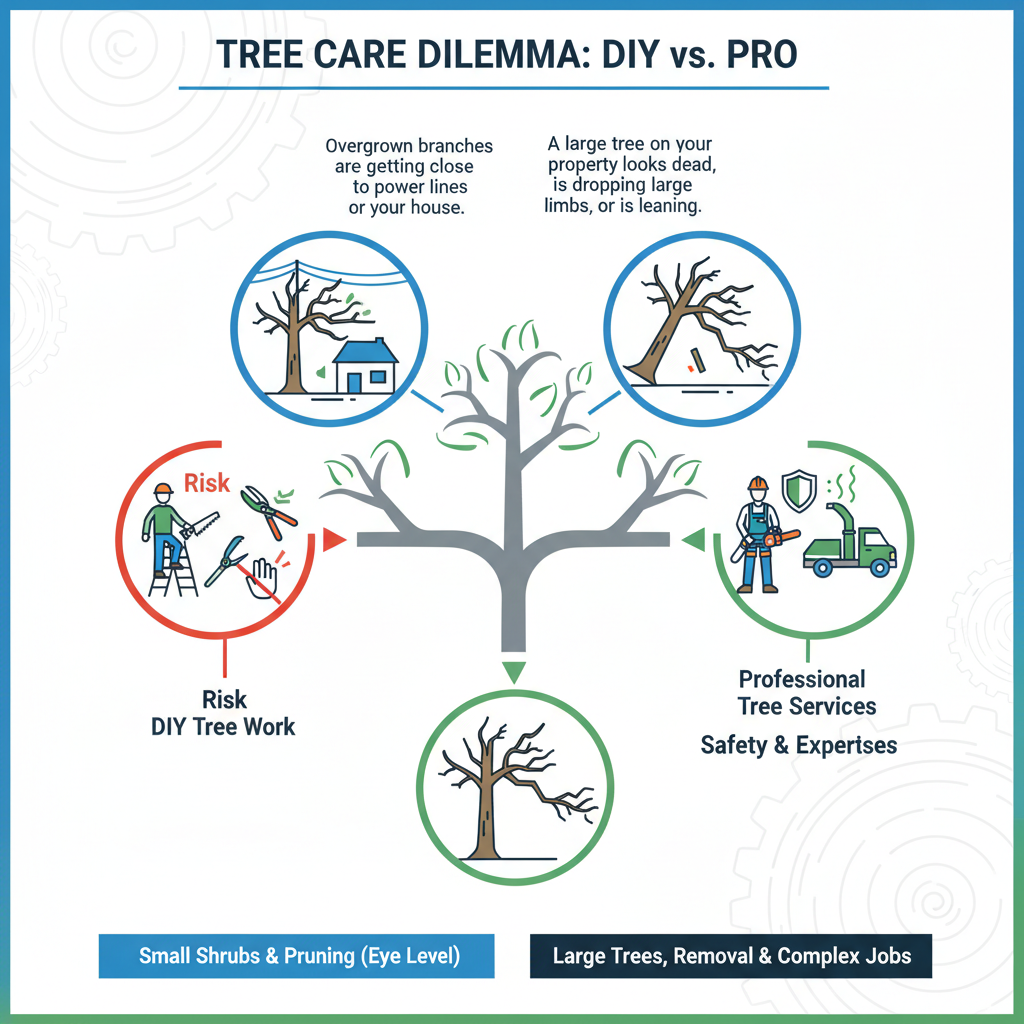
Okay, let me bottom-line this for you. If you can do the work with both feet flat on the ground using hand tools—like pruning small shrubs or branches thinner than your wrist—go for it. No problem. But the second you think about getting on a ladder with a chainsaw, or touching anything that's anywhere near a power line, you stop. Just stop. Call a professional arborist. The few hundred bucks you're trying to save isn't worth your house or a trip to the ER. I've seen the aftermath of DIY gone wrong, and it's a disaster.
Common Symptoms
Possible Causes
Step-by-Step Diagnosis
Step 1
The 'Feet on the Ground' Rule. Assess if you can do ALL the work with your feet planted firmly on the ground. If you need a ladder, stop.
Step 2
Assess the Tree's Size. Look at the trunk and the branches you want to cut. Are they thicker than your arm? The bigger they are, the more dangerous.
Step 3
Evaluate the Location. Look for 'targets' in the drop zone: your house, deck, fence, power lines, your neighbor's property. If it can't be crushed, don't risk it.
Step 4
Determine the Work Needed. Are you just trimming a few small branches, or do you need to take down a whole tree? The bigger the job, the more you need a pro.
Step 5
Be Honest About Your Skills and Gear. Do you have experience with a chainsaw? Do you own chaps, a helmet, and proper rigging? If not, you're not equipped for the job.
Step 6
Research Local Rules. Call your city hall to see if you need a permit for the work you're planning.
Step 7
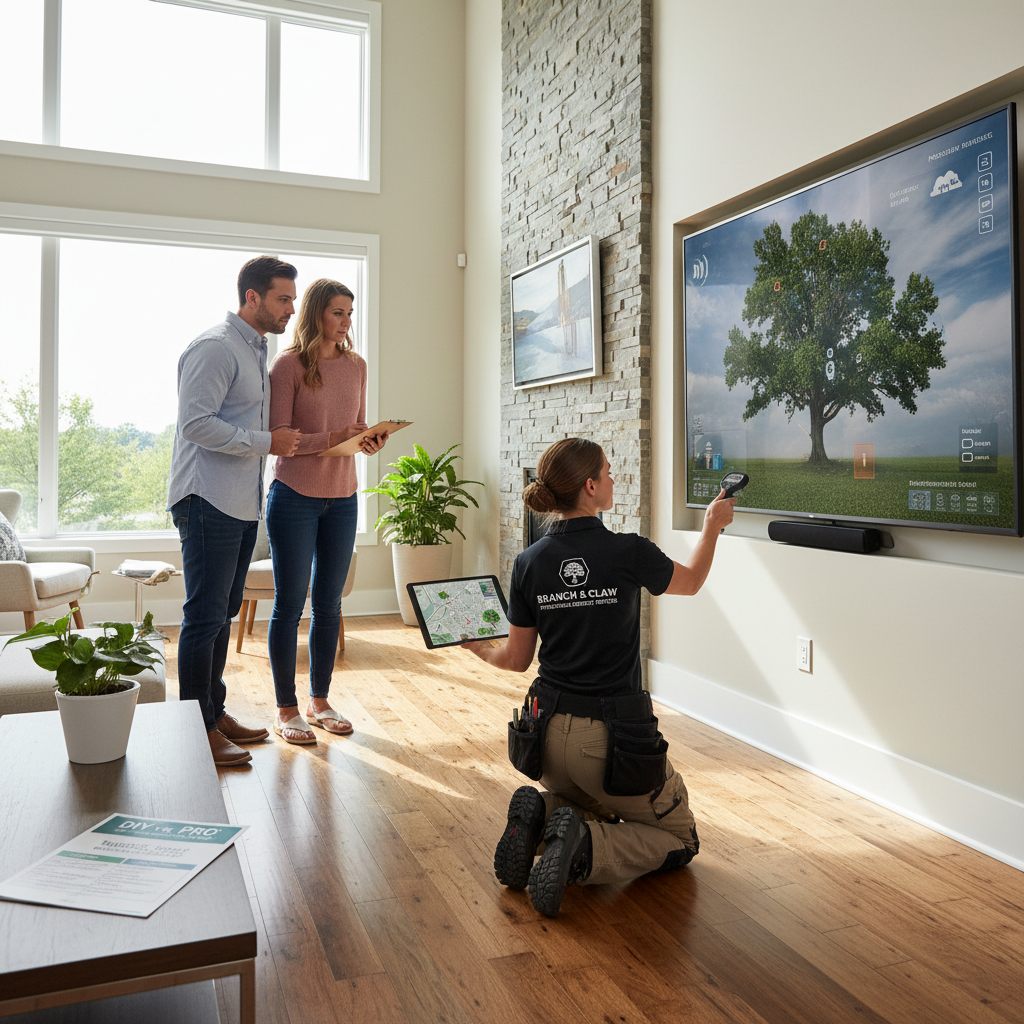
Get Professional Quotes. Even if you're thinking of DIY, get at least two quotes from insured arborists. This gives you a baseline for what the job is *actually* worth and the risks involved.
DIY vs Professional Costs
| Repair Type | DIY Cost | Professional Cost | Time Required |
|---|---|---|---|
Minor Pruning (from ground) | $20-$100 | $150 - $450 | 1-3 hours |
Major Pruning (involving ladders/climbing) | $50 - $300 | $400 - $1,800 | 4-8 hours |
Small Tree Removal (<25 ft, open area) | $50-$200 | $300 - $900 | 3-6 hours |
Large/Hazardous Tree Removal | N/A - Don't do it | $1,000 - $6,000+ | 1-2 days |
When to Call a Professional Tree Service
- Anytime the work is near power lines. Don't mess with it, just call.
- When you would need to use a ladder or leave the ground to do the work.
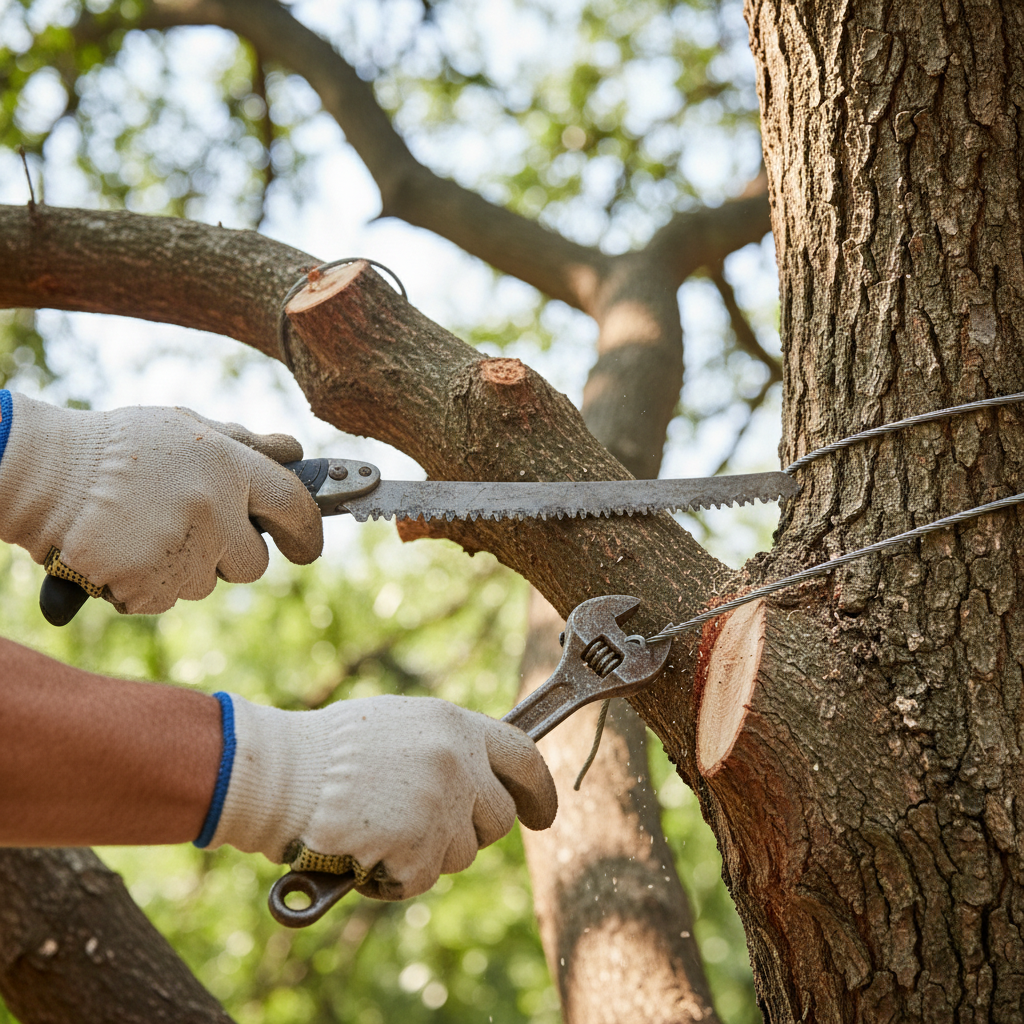
- If you need to use a chainsaw for any part of the job, especially for cuts above shoulder height.
- For the removal of any tree, especially those close to homes, fences, or other structures.
- If a tree appears dead, diseased, or has major structural damage like large cracks or cavities.
- In emergency situations, like after a storm when a tree is unstable or has already caused damage.
Prevention Tips
- Regularly walk your yard and look up at your trees, especially after storms, to spot any broken or dead branches early.
- Do your homework before planting. Don't plant a tree that will grow huge right next to your house or under power lines.
- Perform light, routine pruning on small trees and bushes yourself. You can do this from the ground with hand tools to keep them healthy and prevent them from becoming major problems.
- Every few years, pay a certified arborist for a professional assessment. They can spot issues you'd miss and save you a fortune in the long run.
Frequently Asked Questions
Related Guides
Tree Removal vs. DIY Tree Cutting (Troubleshooting & Fixes)
Thinking about cutting down that tree yourself? As a guy who's seen it all go wrong, here's my honest take on when to DIY and when to call a pro.
Deciding between DIY tree care/removal and hiring professional tree services, considering costs, risks, and benefits. Troubleshooting & Fixes
Deciding on DIY Tree Work vs. Hiring a Pro (My Two Cents)
A veteran tech's brutally honest guide on DIY tree trimming vs. calling a pro. Learn when to save a buck and when you're risking your life and your house.
DIY Tree Work vs The Pros: When to Call for Backup (A Reality Check)
Thinking of DIY tree work? A 25-year vet explains the risks. Learn when to tackle it yourself and when calling a pro is the only smart move.
Neglecting Tree Maintenance vs. Professional Tree Services Troubleshooting & Fixes
Unexplained tree decline, leading to visible signs of distress or death in trees without an obvious cause. Troubleshooting & Fixes
Is your tree just not looking right? A veteran arborist explains how to diagnose vague symptoms like leaf yellowing or thinning canopy and when to call for help.
Need Professional Help?
Find top-rated tree service experts in your area